
Hispano-Suiza HS.404 is an autocannon Place of origin Switzerland
France
Produced 1941 – April 1942
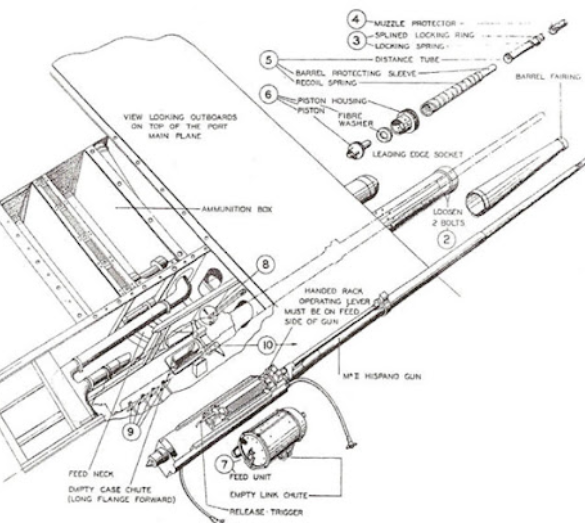

Hispano-Suiza HS.404
is an autocannon
 |
|
| Type | Aircraft cannon |
|---|---|
| Place of origin | SwitzerlandFrance |
| Service history | |
| Wars | |
| Production history | |
| Designer | Marc Birkigt |
| Manufacturer | Hispano-Suiza |
|
|||||
|---|---|---|---|---|---|
.
History AHispano-Suiza HS.404 is an autocannon
Place of origin Switzerland France
Produced 1941 – April 1942
The HS.404 is an autocannon originally designed by and produced by the Swiss arm of the Spanish–Swiss company Hispano-Suiza in the mid-1930s. Production was later moved to the French arm of Hispano-Suiza.
It was widely used as an aircraft, naval and land-based weapon by French, British, American and other military services, particularly during World War II. The cannon is also referred to as Birkigt type 404, after its designer Marc Birkigt and later versions based on British development are known as 20 mm Hispano. Firing a 20 mm calibre projectile, it delivered a significant load of explosive from a relatively light weapon. This made it an ideal anti-aircraft weapon for mounting on light vehicles, as well as a fighter aircraft gun, supplementing or replacing the 7.62 mm (.30 calibre) and .303 inch (7.7 mm) machine guns commonly used in military aircraft of the 1930s. The HS.404 was produced by the French subsidiary of Hispano-Suiza, and under license by a variety of companies in other countries.
U.S. production

The British version was also licensed for use in the United States as the M1, with the United States Army Air Corps (USAAC) and U.S. Navy, which concluded that a single HS404 is analogous to three .50 machine guns in firepower while weighing less than twice as much, planning to switch to the 20 mm calibre as soon as the gun could be produced in sufficient numbers. In 1941 a very large building program was established, along with the production of ammunition. When delivered, the guns proved to be extremely unreliable and suffered a considerable number of misfires due to the round being lightly struck by the firing pin. The British were interested in using this weapon to ease the demand on production in England but after receiving the M1 they were disappointed. British wing-mounted fighter weapons by this period were cocked on the ground by the aircraft armourers before flight, the pneumatic cocking mechanism used previously being regarded as unnecessary weight and detrimental to aircraft performance; any stoppage in flight made the gun unusable until it could be cleared on the ground. The misfires also had the tendency to cause aircraft with wing-mounted guns to yaw away from the wing with the failed gun when the guns were fired, due to the unequal recoil, throwing off the pilot's aim.


Kg
Weapon weight
rounds/min
Rate of Fire
Length
Weapon Lenght
Introduction
Introduction
Photo Gallery
Hispano-Suiza HS.404 is an autocannon Place of origin
Switzerland France
Produced 1941 – April 1942


Hispano-Suiza HS.404, also known as the Birkigt type 404 after designer Marc Birkigt, was 20mm calibre automatic cannon
-
-
-
-
Hispano-Suiza HS.404 autocannon
Service history Wars Production history Designer Marc Birkigt Manufacturer Hispano-Suiza Specifications Mass 49 kg (108 Length 2.52 m (8 ft 3 in) Barrel length 1.7 m (5 ft 7 in)
Cartridge 20×110mm Calibre 20 mm (0.79 in) Action Gas operated Rate of fire 700-750 rounds/min Muzzle velocity 840–880 m/s (2,800–2,900 ft/s) Feed system Drum magazine, belt (later models)
-
-
-
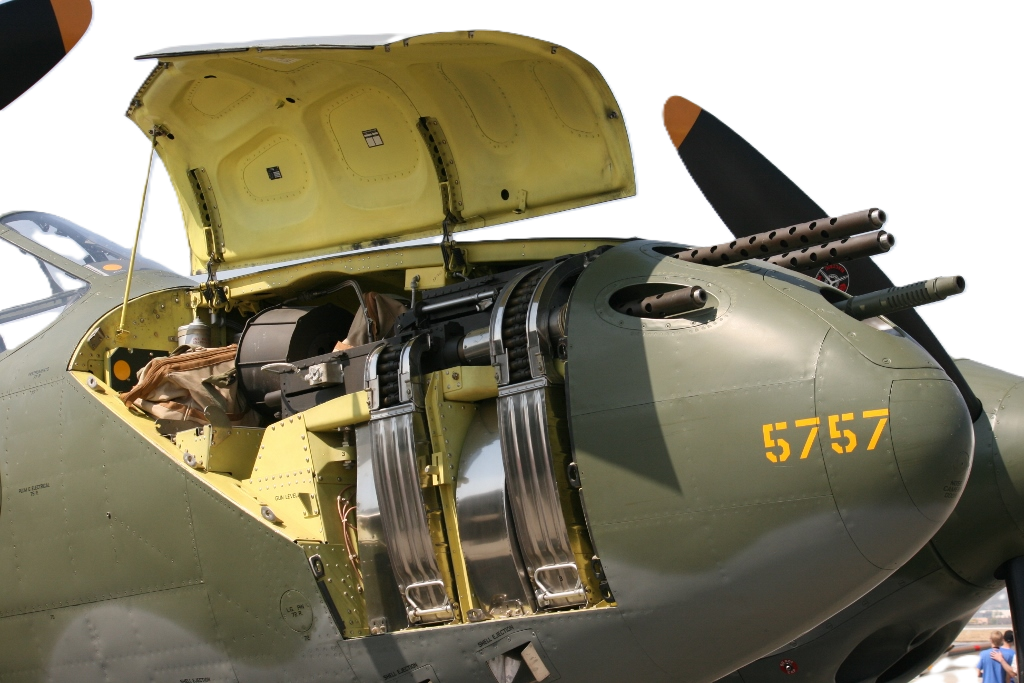
-
Specifications Mass - 29.3 kg (65 lb) (breech mechanism)
- 21.5 kg (47 lb) (barrel with muzzle brake)
- 10 kg (22 lb) (loaded 60-round M1 drum magazine)
- 8.6 kg (19 lb) (M1 feed mechanism)
Length 2.54 m (100 in) Barrel length - 1.710 m (5 ft 7.3 in)
- Rifling: 9 grooves, right-hand twist, 1:160 cm (1-in-63 inches) turn
Cartridge 20×110mm Hispano "A" Calibre 20 mm (0.79 in) Action Gas operated, delayed blowback Rate of fire 650–700 rounds/min Muzzle velocity 870 m/s (2,900 ft/s) Maximum firing range 6,500 m (7,000 yd) Feed system 60-round M1 drum or linked belt
Links to Youtube & Others
The gun had a muzzle velocity between 840 and 880 m/s (2,800 and 2,900 ft/s), depending on barrel length. Rate of fire was between 600 and 850 rounds per minute. The gun was 2.36 m (7 ft 9 in) long, weighing between 42 and 50 kg (93 and 110 lb)

Hispano-Suiza HS.404
is an autocannon
Hispano-Suiza HS.404, also known as the Birkigt type 404 after designer Marc Birkigt,

Youtube Link
Firing a 20mm diameter projectile, it delivered a useful load of explosive from a relatively light weapon.

Read more in The Hispano fired a 130-gram (4.6 oz) 20 mm diameter projectile from a 110 mm (4.3 in) long casing, the whole round weighing 257 g (9.1 oz)
.png)


