
The Bofors 40 mm Automatic Gun L/60 (often referred to simply as the "Bofors 40 mm gun", the "Bofors gun"
designed in the 1930s
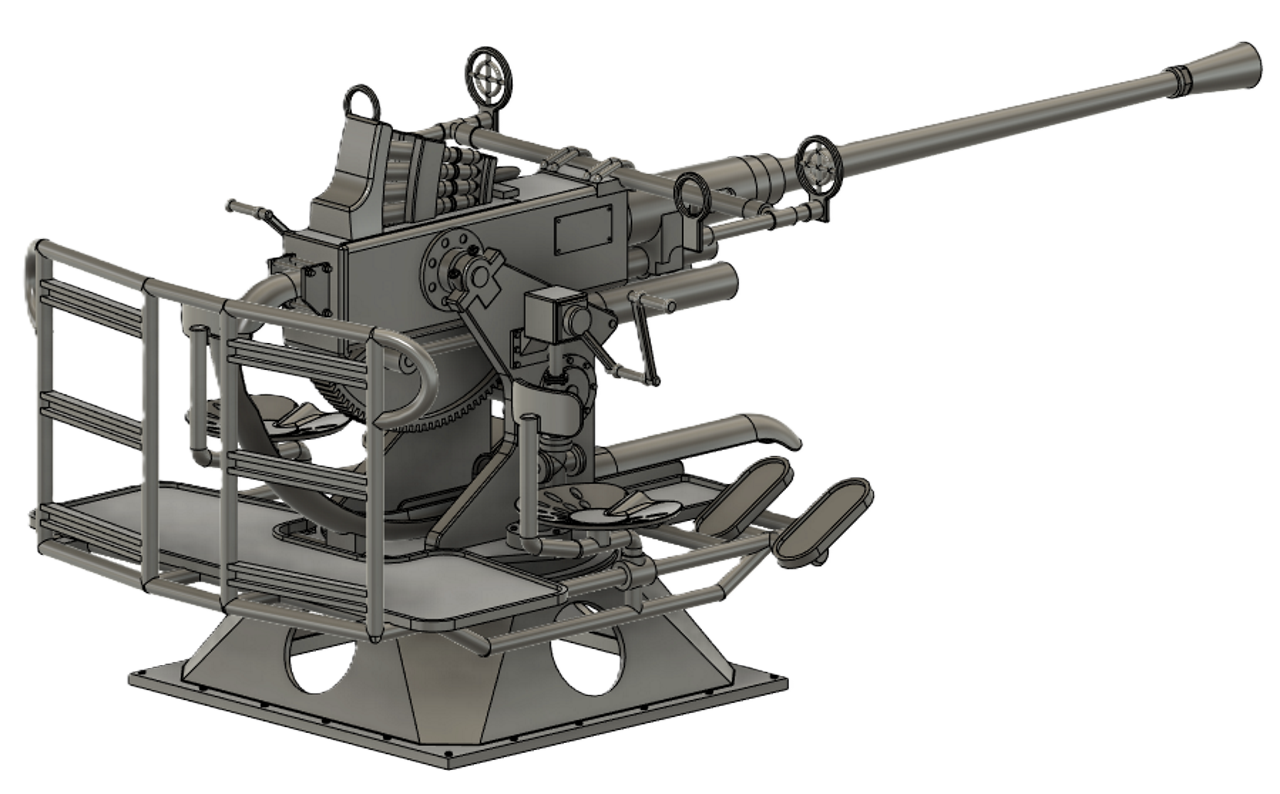

The Bofors 40 mm
Automatic Gun L/60
|
|||||||||||||||||||||||||||||||||||
|---|---|---|---|---|---|---|---|---|---|---|---|---|---|---|---|---|---|---|---|---|---|---|---|---|---|---|---|---|---|---|---|---|---|---|---|

.
History The Bofors 40 mm Automatic Gun L/60
(often referred to simply as the "Bofors 40 mm gun",
the "Bofors gun"
designed in the 1930s

The Bofors 40 mm Automatic Gun L/60 (often referred to simply as the "Bofors 40 mm gun", the "Bofors gun" and the like, see name) is an anti-aircraft autocannon, designed in the 1930s by the Swedish arms manufacturer AB Bofors. The gun was designed as an intermediate anti-aircraft gun, filling the gap between fast firing close-range small calibre anti-aircraft guns and slower firing long-range high calibre anti-aircraft guns. For its time, the Bofors 40 mm L/60 was perfectly suited for this role and outperformed competing designs in the years leading up to World War II in both effectiveness and reliability. It entered the export market around 1932 and was in service with 18 countries by 1939. Throughout World War II it became one of the most popular and widespread medium-weight anti-aircraft guns. It was used by the majority of the western Allies and some Axis powers such as Nazi Germany and Hungary.
Products AB Bofor


The name Bofors is strongly associated with the Bofors 40 mm L/60 gun used by both sides during World War II. This automatic cannon is often simply called the Bofors gun and saw service on both land and sea. It became so widely known that anti-aircraft guns in general were often referred to as Bofors guns. Another well-known gun made by the company was the Bofors 37 mm Anti-Tank Gun L/45, a standard anti-tank weapon used by a variety of armies from the mid 1930s throughout World War II. It was built under licence in a variety of nations such as Finland, The Netherlands and Poland[22] and used in a variety of tanks and armored vehicles, such as the Vickers 6-ton, M39 Pantserwagen and 7TP, among others.

Km
Max firing range
rounds/min
Rate of Fire
Length
Weapon Lenght
Introduction
Introduction
Photo Gallery
The Bofors 40 mm Automatic Gun L/60
(often referred to simply as the "Bofors 40 mm gun",
the "Bofors gun" designed in the 1930s


The Bofors 40 mm Automatic Gun L/60 (often referred to simply as the "Bofors 40 mm gun", the "Bofors gun" designed in the 1930s
-
-
-
-
The Bofors 40 mm
Automatic Gun L/60
Specifications Barrel length 2.25 m (7 ft 5 in) Crew 4[2] (dependent on use)
Shell 40×311mmR Shell weight 0.9 kg (2 lb 0 oz) Caliber 40 mm (1.57 in) Action Automatic extraction and integrated cam-operated recoil powered autoloader Breech Vertical sliding-wedge
-
-
-
-
Carriage 522 kg (1,151 lb) Elevation −5°/+90°, 55°/s Traverse Full 360°, 50°/s Rate of fire - Low elevation angles: 140 rounds/min
- High elevation angles: 120 rounds/min
Muzzle velocity 850–880 m/s (2,800–2,900 ft/s) Maximum firing range 7,160 m (7,830 yd)
Links to Youtube & Others
The Bofors 40 mm Automatic Gun L/60 is known under a variety of names around the world. In common historical nomenclatures it is commonly known under the names Bofors 40 mm gun, 40 mm Bofors gun and Bofors gun.

The Bofors 40 mm
Automatic Gun L/60
NR-23: This was a 23 mm autocannon that entered service in 1949 as an improvement over earlier designs

Youtube Link
R-23: This weapon, developed by Aron Abramovich Rikhter, was a 23 mm gas-operated revolver cannon

Read more in It entered the export market around 1932 and was in service with 18 countries by 1939.
.png)


