Steel in the Sky Wikipedia link
"Steel in the Sky" The roar of twin engines shattered the silence over the Baltic Sea. Flying low and fast, Lieutenant Joris van Dijk gripped the controls of his Eurofighter Typhoon, eyes locked on the radar. A rogue drone had breached NATO airspace, and it was his job to intercept.
The Amazing aircraft weapons.
At the core of the formidable might of military aviation lies an impressive arsenal of weapons systems, meticulously designed to unleash devastation upon adversaries or precisely engage targets with surgical precision. From air-to-air missiles capable of reaching supersonic speeds to precision-guided bombs capable of hitting targets with unmatched accuracy, aircraft weapons systems embody the cutting edge of military technology.
The Shadow Over The Desert
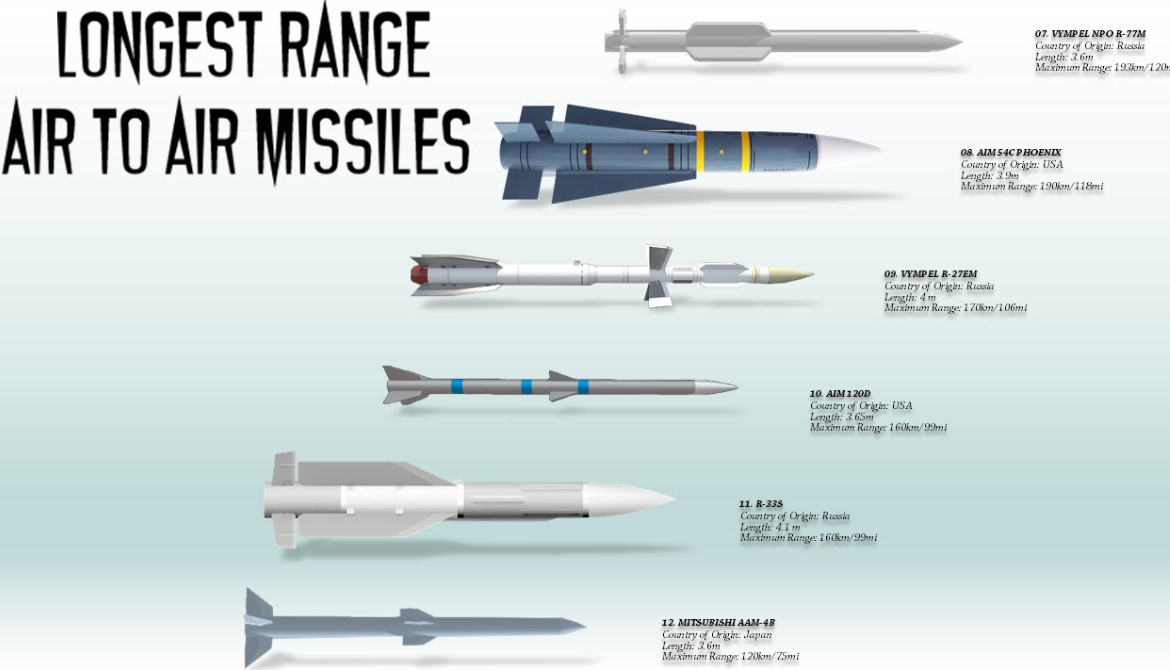
In the early morning, an F-15 Eagle glided silently through the sky above a vast desert. Under its wings hung AIM-120 AMRAAM missiles—sleek, deadly, and designed to eliminate enemy aircraft from miles away. The pilot, Captain Elena Cruz, had a clear mission: take down a hostile drone attempting to transmit critical data. Suddenly, her radar beeped. Target locked. With a quick press of a button, the missile launched, leaving a white streak across the blue sky. Within seconds, the target was destroyed—a precision strike without Elena ever seeing her opponent. Back at the base, she inspected her aircraft. The M61 Vulcan, a six-barrel cannon built into the nose of the jet, hadn’t fired today. But its presence was a quiet reminder: air combat isn’t always fought from a distance. Sometimes, it comes down to speed, instinct... and steel.
Created in 1919
n World War I, aircraft were initially intended for aerial reconnaissance, however some pilots began to carry rifles in case they spotted enemy planes. Soon, planes were fitted with machine guns with a variety of mountings; initially the only guns were carried in the rear cockpit supplying defensive fire (this was employed by two-seat aircraft all through the war). Seeing a need for offensive fire, forward-firing weapons were devised. The Airco DH.2 pusher plane had its gun in the front while the engine was in the back, some experimented with mountings on the (side) wing or on the biplane's upper wing (above the cockpit), until by 1916 most fighter aircraft mounted their guns in the forward fuselage using a synchronization gear so that the bullets did not strike the propeller. |
|
|---|---|

|
|
|---|
Amazing Aircraft Weapons from (1914 to Present).
RED color: Wikipedia link
Blue color: Encyclopedia link
.
According to the squadron's entry in Flying Units of the RAF by Alan Lake, No. 617 Squadron was allocated the unit identification code MZ for the period April to September 1939, even though the unit did not actually exist at the time.
Second World War
The squadron was formed under great secrecy at RAF Scampton during the Second World War on 21 March 1943. It included Royal Canadian Air Force, Royal Australian Air Force and Royal New Zealand Air Force personnel and was formed for the specific task of attacking three major dams that contributed water and power to the Ruhr industrial region in Germany: the Möhne, Eder and Sorpe. The plan was given the codename Operation Chastise and carried out on 17 May 1943. The squadron had to develop the tactics to deploy Barnes Wallis's "Bouncing bomb", and undertook some of its training over the dams of the Upper Derwent Valley in Derbyshire, as the towers on the dam walls were similar to those to be found on some of the target dams in Germany
Commercial aircraft
Photo Gallery
Aircraft weapons


14th March 1945 - First 'Grand Slam' raid
617 Squadron is based at RAF Marham during WW2
The first of the enormous British ‘Grand Slam’ ‘earthquake’ bombs were dropped in anger 75 years ago this month.
‘Grand Slam’ was the ‘big brother’ of the ‘Tallboy’ which had been used by IX and 617 Squadrons since June 1944 mainly against hardened concrete bunkers, including ‘V’ weapon sites, and which famously sunk the German battleship Tirpitz in November 1944. Both the 12,000lb ‘Tallboy’ and the 21,500lb ‘Grand Slam’ bombs were products of the innovative mind of scientist and inventor Barnes Wallis. The 10-ton ‘Grand Slam’ was officially known as ‘Bomb, MC (Medium Capacity) 22,000lb’; it was just over 25 feet (almost 8 metres) long and almost 4 feet (1.2 metres) in diameter, and contained 9,135lb of Torpex explosive. The bomb casings were produced by Vickers & Co, Sheffield, at their River Don Works. Like the Tallboy, after hot molten Torpex was poured into the casing, the explosive took a month to cool and set..
.
Famous Aircraft Weapons
The Grand Slam Bomb is the heaviest bomb in the world, weighing 10 tonnes. They were produced by Vickers & Co, Sheffield, at their River Don Works during the Second World War.
Learn MoreAIM-9L Sidewinder
Lorem Ipsum Dolor Sit Amet, Consectetur Adipiscing Elit. Nullam Vitae Congue Tortor.
AIM-9X Sidewinder
Lorem Ipsum Dolor Sit Amet, Consectetur Adipiscing Elit. Nullam Vitae Congue Tortor.


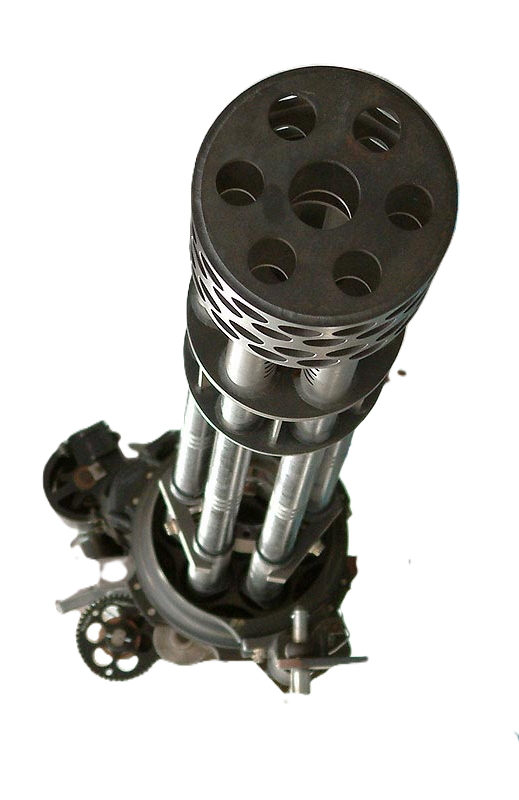
M61 Vulcan is a hydraulically, electrically, or pneumatically driven, six-barrel, air-cooled, electrically fired Gatling-style rotary cannon
GE M61 Vulcan
 An unmounted M61A1 Vulcan with flash suppressor used in the SUU-16/A gun pod An unmounted M61A1 Vulcan with flash suppressor used in the SUU-16/A gun pod |
|
| Type | Rotary cannon |
|---|---|
| Place of origin | United States |
| Service history | |
| In service | 1959–present |
| Used by | United States, some NATO members, South Korea, Saudi Arabia, and others |
| Production history | |
| Designer | General Electric |
| Designed | 1946 |
| Manufacturer | General Dynamics |
Specifications
| Specifications | |
|---|---|
| Mass |
|
| Length | 71.93 in (1.827 m) |
| Barrel length | 59.8 in (1.52 m) |
Dimensions
| Cartridge | 20×102mm Vulcan |
|---|---|
| Caliber | 20 mm (0.787 in) |
| Barrels | 6-barrel (progressive RH parabolic twist, 9 grooves) |
| Action | Hydraulically operated, electrically fired, rotary cannon |
| Rate of fire | 6,000 rounds per minute |
| Muzzle velocity | 3,450 ft/s (1,050 m/s) with PGU-28/B round |
| Effective firing range | About 9,842 ft (3,000 m) |
| Feed system | Belt or linkless feed system |

.png)
.png)