Cessna Aircraft Company
Cessna T-37 Tweet (designated
Model 318 by Cessna)
Manufactured 1955–1975
First flight 12 October 1964

CessnaT-37 Tweet Tweety "Trainer"
|
|||||||||||||||||||||||||||||

.
History Cessna Aircraft Company
Cessna T-37 Tweet (designated Model 318 by Cessna)
Manufactured 1955–1975
First flight 12 October 1964
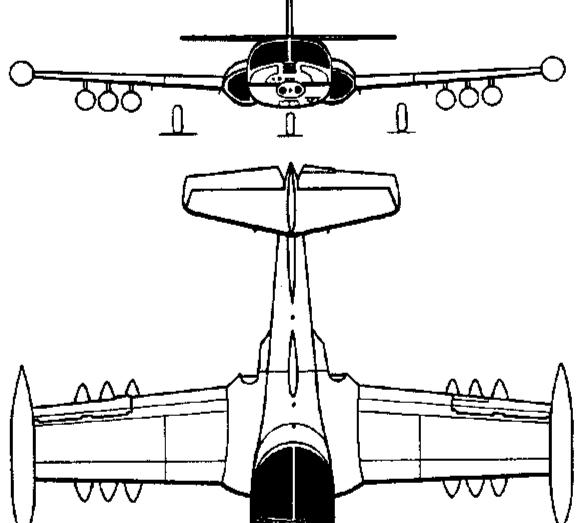
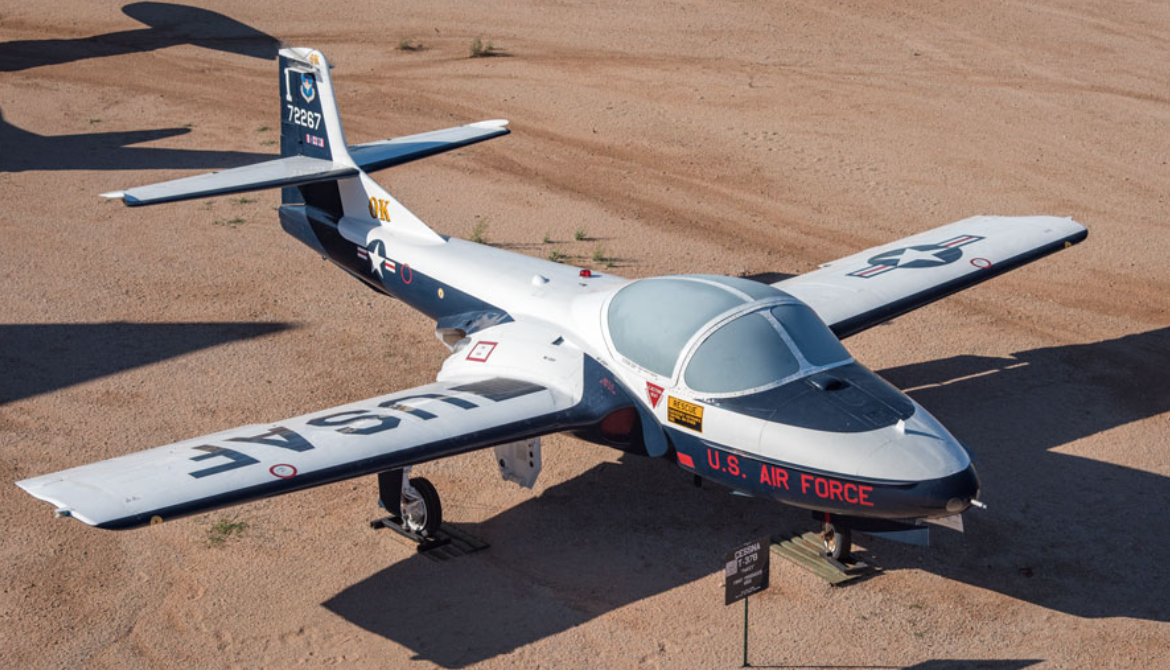
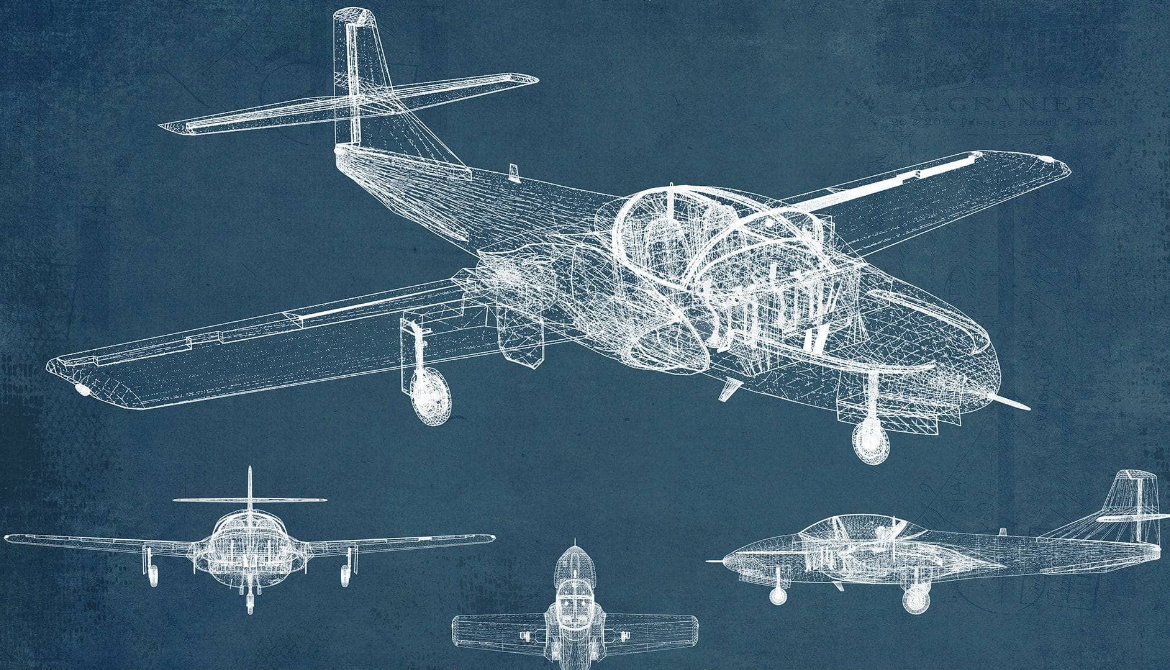
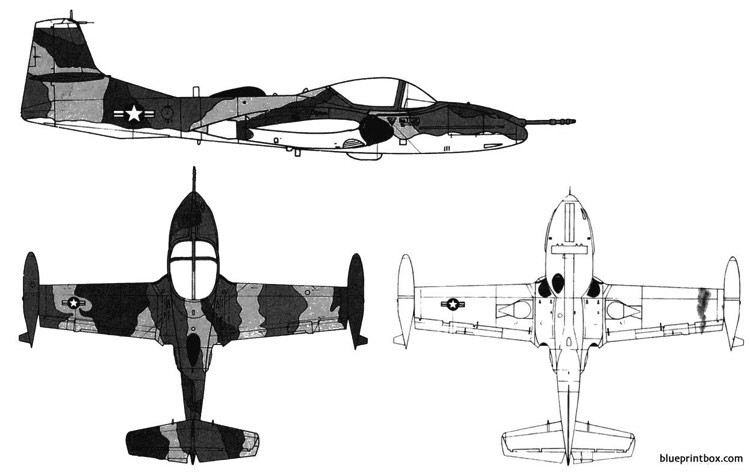
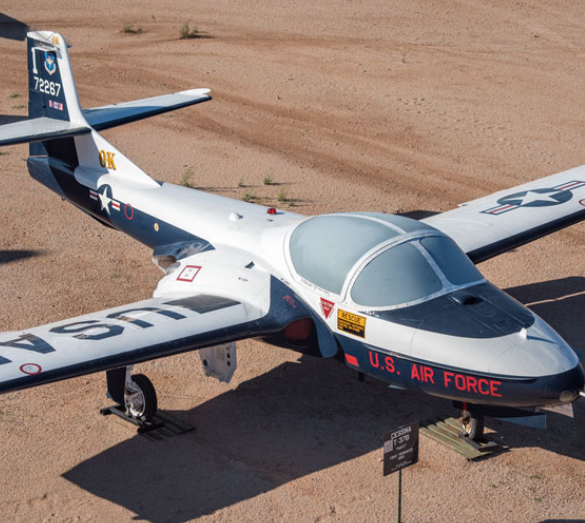
The Cessna T-37 Tweet (designated Model 318 by Cessna) is a small, economical twin-engine jet trainer aircraft. It was flown for decades as a primary trainer of the United States Air Force (USAF) as well as in the air forces of several other nations.
The T-37 was developed in response to the launch of the "Trainer Experimental (TX)" program for the United States Air Force (USAF) in early 1952. On 12 October 1954, the prototype XT-37 performed its maiden flight. While the first prototype was lost during spin tests, features to improve handling were installed upon subsequent prototypes, such as nose-mounted strakes and a heavily redesigned large tail unit, after which the USAF chose to order the aircraft into production as the T-37A. The service received the first production aircraft during June 1956.
Production

The production T-37A was similar to the XT-37 prototypes, differing only in only minor ways as to address problems revealed by flight testing. During September 1955, the first T-37A was completed, it made its first flight later that year. The USAF ultimately ordered 444 T-37As, the last of which was produced in 1959. During 1957, the US Army evaluated three T-37As for battlefield observation and other combat support roles, but eventually procured the Grumman OV-1 Mohawk for this purpose instead. Darling alleges that this outcome had been largely due to political factors, including the opposition of the USAF.
USAF officials reportedly liked the T-37A but often considered it to be underpowered; consequently, the service ordered an improved version, the T-37B. It was outfitted with uprated J-69-T-25 engines that provided roughly 10 percent more thrust as well as being more reliable. The new variant also featured improved avionics, fuel flow improvements, as well as various changes to reduce maintenance requirements. A total of 552 newly built T-37Bs was constructed through 1973. All surviving T-37As were progressively upgraded to the T-37B configuration as well, the rebuilding program being completed by July 1960.[
0
KmCeiling
0
KmCombat RANGE
0
Km/hAircraft Speed
0
Max Crew
Photo Gallery
Cessna Aircraft Company
Cessna T-37 Tweet (designated Model 318 by Cessna)
Manufactured 1955–1975
First flight 12 October 1964



Cessna Aircraft Company
Cessna T-37 Tweet, or Tweety
General Info
-
-
- Crew: 2
- Length: 29 ft 3 in (8.92 m)
- Wingspan: 33 ft 9.32 in (10.2951 m)
- Height: 9 ft 2 in (2.79 m)
- Wing area: 201 sq ft (18.7 m2)
-
Powerplant
-
-
- Empty weight: 4,056 lb (1,840 kg)
- Max takeoff weight: 6,574 lb (2,982 kg)
- Powerplant: 2 × Continental-Teledyne J69-T-25 turbojets, 1,025 lbf (4.56 kN) thrust each
-
Performance
- Maximum speed: 425 mph (684 km/h, 369 kn)
- Cruise speed: 360 mph (580 km/h, 310 kn) at 35,000 ft (11,000 m)
- Stall speed: 85 mph (137 km/h, 74 kn)
- Range: 932 mi (1,500 km, 810 nmi)
- Service ceiling: 38,700 ft (11,800 m) [5]
- Rate of climb: 3,370 ft/min (17.1 m/s)
Armament
-
- Total stores stations: None (T-37A/B), 2 underwing for stores up to 500 lb (227 kg) (T-37C)
Links to Youtube & Others
The T-37 can be traced back to the spring of 1952 and the issuing of a request for proposals by the United States Air Force (USAF) for what would become the "Trainer Experimental (TX)" program. The request called for a lightweight twin-seat basic trainer that would be suitable for introducing USAF cadets to jet aircraft. More specifically,

CessnaT-37 Tweet
Tweety
A dedicated attack variant of the T-37, referred to as the A-37 Dragonfly, was developed during the 1960s

Youtube Link
Over the decades, the USAF made several attempts to replace the T-37, such as the abortive Fairchild T-46, however it remained in service with the USAF into the twenty-first century.
Read more in Cessna Textron
aircraft Corporation