


.jpg) |
|
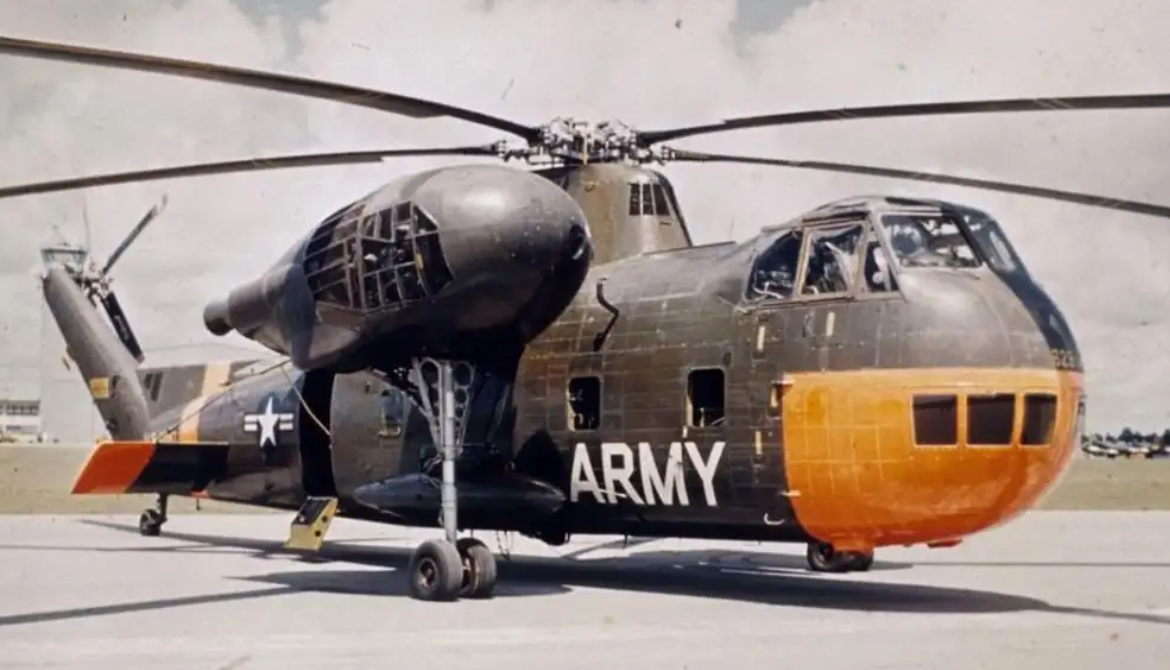
| H-37 Mojave of the US Army in flight. | |
| Role | Cargo helicopter |
|---|---|
| National origin | United States |
| Manufacturer | Sikorsky Aircraft |
| First flight | 18 December 1953 |
| Introduction | July 1956 |
| Retired | Late 1960s |
| Status | Retired |
| Primary users | United States Army United States Marine Corps |
| Number built | 154 |
| Developed into | Sikorsky S-60 Westland Westminster |


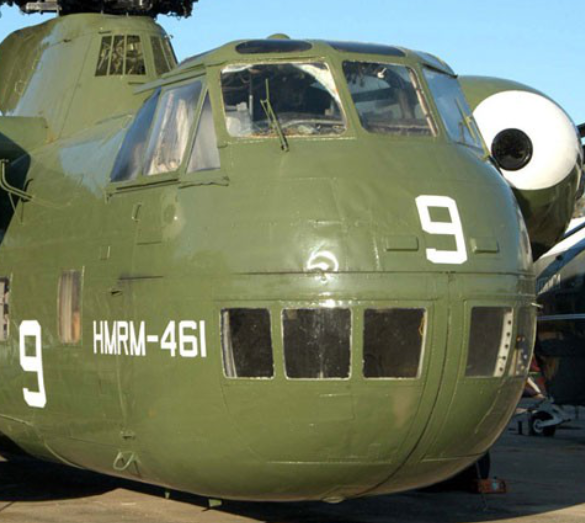
The S-56 came into being as an assault transport for the United States Marine Corps (USMC), with a capacity of 26 fully equipped Marines. An order for the aircraft was placed in 1951 using the U.S. Navy/U.S. Marine Corps designation of the time of HR2S. The first prototype, the XHR2S-1 flew in 1953, and production deliveries of the HR2S-1 "Deuce" began in July 1956 to Marine Helicopter Squadron One (HMX-1), with a total of sixty aircraft being produced.
The United States Army evaluated the prototype in 1954 and ordered 94 examples as the CH-37A, the first being delivered in summer 1956. All Marine Corps and Army examples were delivered by mid-1960. Army examples were all upgraded to CH-37B status in the early 1960s, being given Lear auto-stabilization equipment and the ability to load and unload while hovering. In the 1962 unification of United States military aircraft designations, the USMC examples were redesignated from HR2S-1 to CH-37C.
Ceiling
MAX RANGE
Aircraft Speed
Max Crew




Aircraft of comparable role, configuration, and era
A total of 154 were produced by the time production ended. Of those, 94 were H-37A, and 90 that were converted to H-37B (later CH-37A and B respectively). It remains the largest piston powered helicopter.

The CH-37 was one of the last heavy helicopters to use piston engines
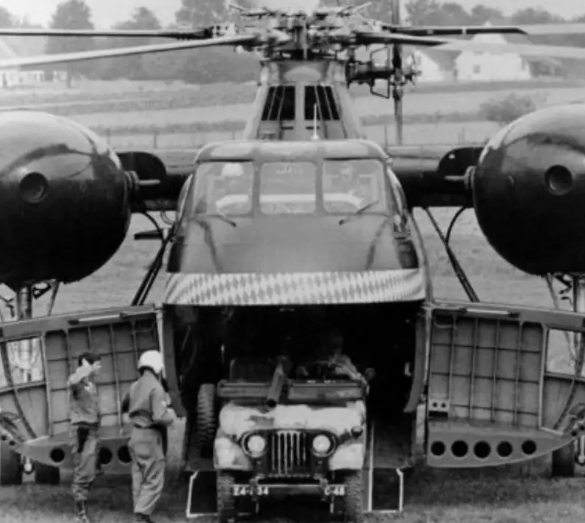
Six CH-37C's were deployed to Vietnam in September 1965 to assist in the recovery of downed U.S. aircraft



.svg.png)