
Dornier Flugzeugwerke
Dornier 328 is a turboprop
Manufactured 1991–2000
2020-present
Introduction date October 1993
First flight 6 December 1991
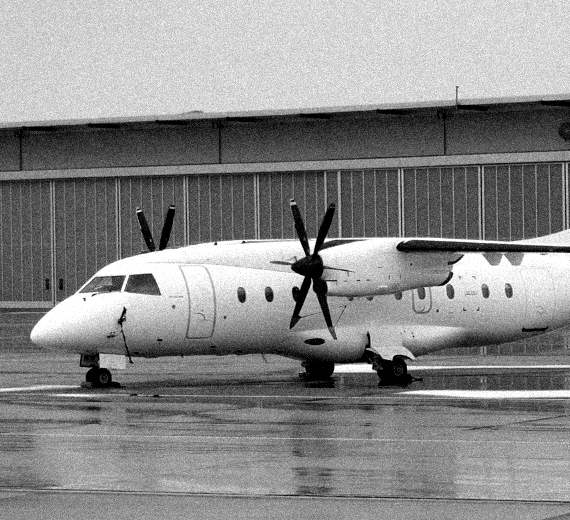

Dornier 328
is a turboprop
 |
|
| General information | |
|---|---|
| Type | Airliner |
| National origin | Germany |
| Manufacturer | Dornier, Fairchild-Dornier Sierra Nevada Corporation Deutsche Aircraft |
| Status | In service |
| Primary users | Central Mountain AirRhein-Neckar Air Eagle Air (Iceland) |
| Number built | 107 |
| History | |
| Manufactured | 1991–20002020-present |
| Introduction date | October 1993 |
| First flight | 6 December 1991 |
| Developed into | Fairchild Dornier 328JET |
.
History Dornier Flugzeugwerke.
Dornier 328 is a turbopropManufactured 1991–2000
2020-present
Introduction date October 1993
First flight 6 December 1991

The Dornier 328 is a turboprop-powered commuter airliner. Initially produced by Dornier Luftfahrt GmbH, the firm was acquired in 1996 by Fairchild Aircraft. The resulting firm, named Fairchild-Dornier, manufactured the 328 family in Oberpfaffenhofen, Germany, conducted sales from San Antonio, Texas, United States, and supported the product line from both locations. A jet-powered version of the aircraft, the Fairchild Dornier 328JET, was also produced.
The Dornier 328 program was initially started while Dornier was still owned by Deutsche Aerospace. According to Deutsche Aerospace program manager Reinhold Birrenbach, the 328 had its origins in market research conducted in and around 1984; feedback from airlines indicated a desire for a fast, quiet, and easy-to-maintain commuter airliner with a 30-seat capacity. This market research reportedly led Deutsche Aerospace to formulate a sales prediction of 400 or greater units being purchased overall; this forecast was in part derived from the reasoning that the 328 would be more advanced than its nearest competitors. Favourable features included a high cruising speed of 345 kt (640 km/h), as well as a higher cruising altitude and range, making the aircraft almost as fast as jet airliners while being more fuel-efficient; a trend away from spoke–and-hub distribution in favour of point-to-point transit was also viewed as being favourable to the 328.
Design

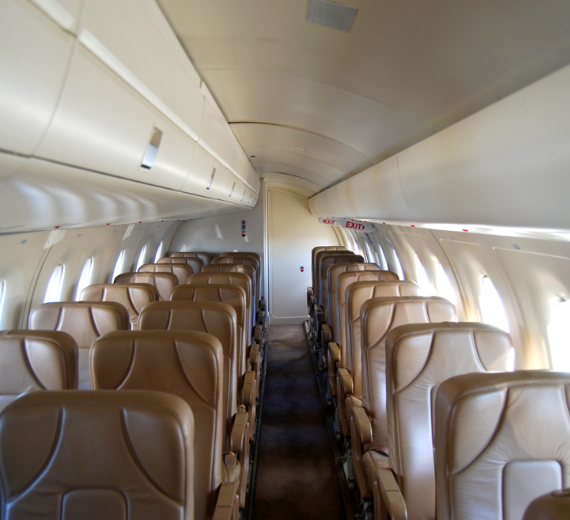
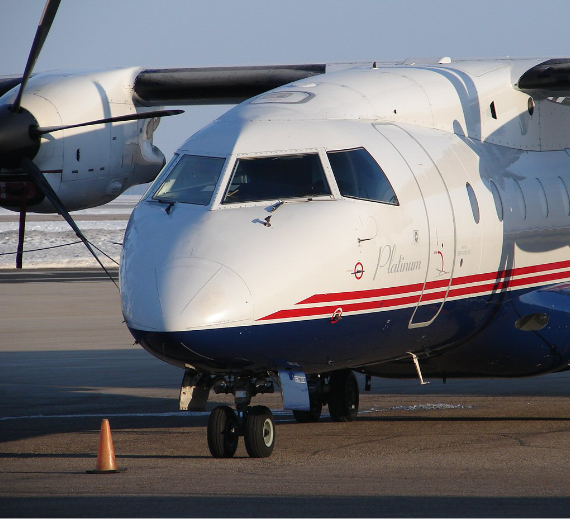
Forward section of a 328 The Dornier 328 is a twin-turboprop engined, regional aircraft, principally designed for short-haul passenger operators; Deutsche Aerospace often promoted the type as being a "third-generation airliner". The fuselage of the 328 employs an unusual streamlined shape, having been optimised for high cruising speeds; the aircraft is capable of higher cruise and approach speeds than most turboprop-powered aircraft, which allows it to be more readily slotted around jetliners during landing approaches. According to Deutsche Aerospace, the 328 offered the "lowest noise level, widest cabin, highest standing room, widest cabin floor, and widest seats in the three-abreast class". The 328 is capable of operations from semiprepared airstrips and rough runways, incorporating features such as its retractable landing gear being equipped with high-floatation tyres and steerable nose gear and a gravel guard
.jpg)
0
KmCeiling
0
KmCombat RANGE
0
Km/hAircraft Speed
0
Max Crew
Photo Gallery
Dornier Flugzeugwerke
Dornier 328 is a turboprop
Manufactured 1991–2000
2020-present
First flight 6 December 1991




Dornier Flugzeugwerke
Dornier DO-328-TurbopropManufactured 1991–2000
2020-present
Introduction date October 1993
First flight 6 December 1991
General Info
-
-
- Crew: 3 (2 Pilots, one Flight Attendant)
- Capacity: 30 to 33 (14 in First Class Config) / 4,890 kg (10,781 lb) payload
- Length: 21.23 m (69 ft 8 in)
- Wingspan: 20.98 m (68 ft 10 in)
- Height: 7.05 m (23 ft 2 in)
- Wing area: 40 m2 (430 sq ft)
-
Powerplant
-
- Empty weight: 9,100 kg (20,062 lb)
- Max takeoff weight: 13,990 kg (30,843 lb)
- Powerplant: 2 × Pratt & Whitney Canada PW119B turboprop engines, 1,625 kW (2,179 hp) each
-

Performance
- Cruise speed: 620 km/h (390 mph, 330 kn)
- Range: 1,852 km (1,151 mi, 1,000 nmi)
- Service ceiling: 9,492 m (31,142 ft)
Links to Youtube & Others
At one point, the first flight of a Turkish-built aircraft was anticipated to occur during 2019. However, During October 2017, Turkey announced that it was abandoning the programme as a consequence of escalating costs.

Youtube Link
Conceived as a competitive aircraft the Bf 108 would take part in the 1936 Berlin Olympics.
Read more in Fairchild Aviation Corporation. Originally known as the Seversky Aircraft Company


