Bristol Aeroplane Company
Bristol Blenheim type 142
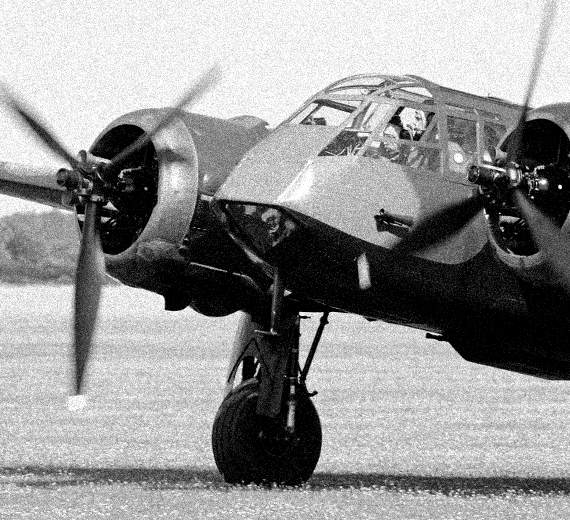

Bristol Aeroplane Bristol Blenheim
.jpg) |
|
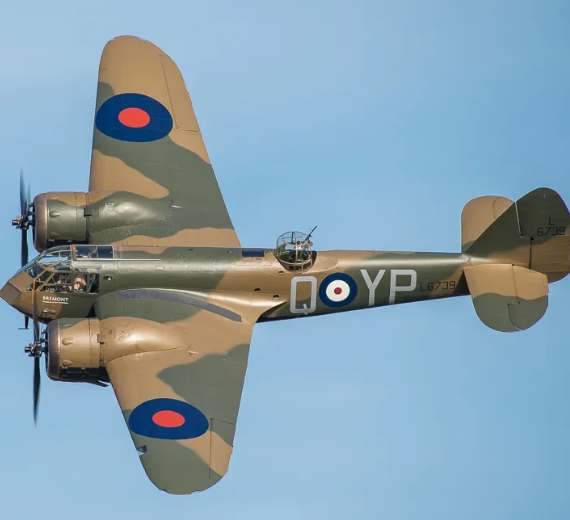
| A Blenheim with the short Mk I nose at RIAT, 2015 | |
| Role | |
|---|---|
| Manufacturer | Bristol Aeroplane Company |
| Designer | Frank Barnwell |
| First flight | 12 April 1935 |
| Introduction | 1937 |
| Retired | 1944 (United Kingdom)1958 (Finland) |
| Primary users | Royal Air Force Royal Canadian Air Force Finnish Air Force Royal Yugoslav Air Force |
| Number built | 4,422 |
| Variants | Bristol Beaufort Bristol Fairchild Bolingbroke |
.
History Bristol Aeroplane Company
Bristol Blenheim type 142
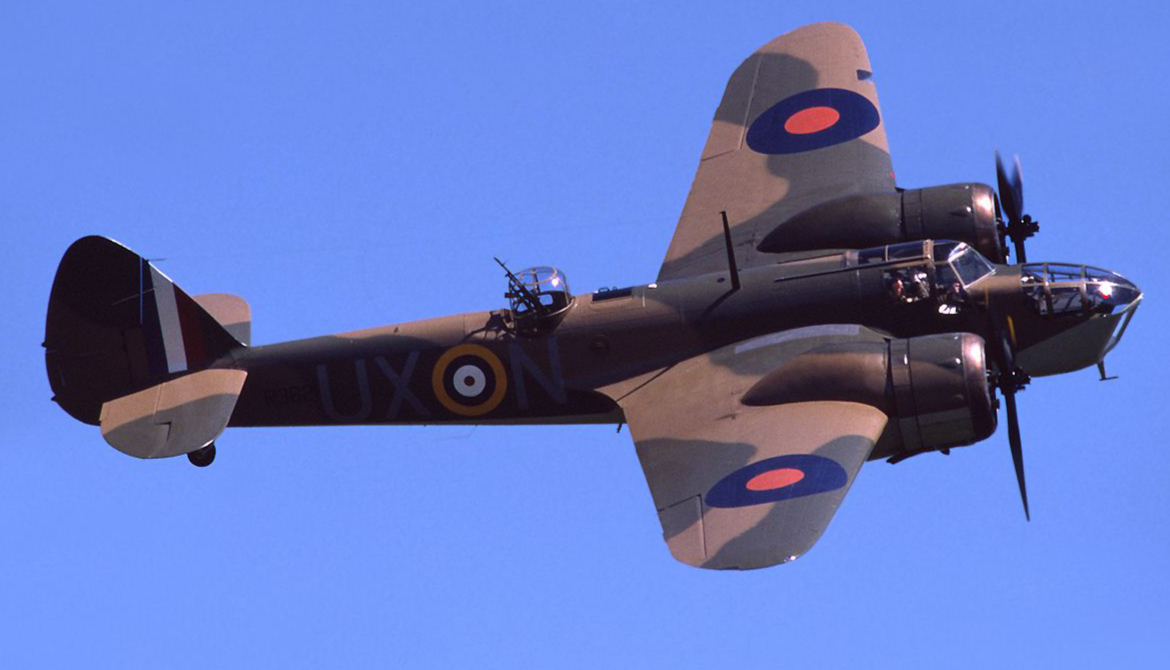
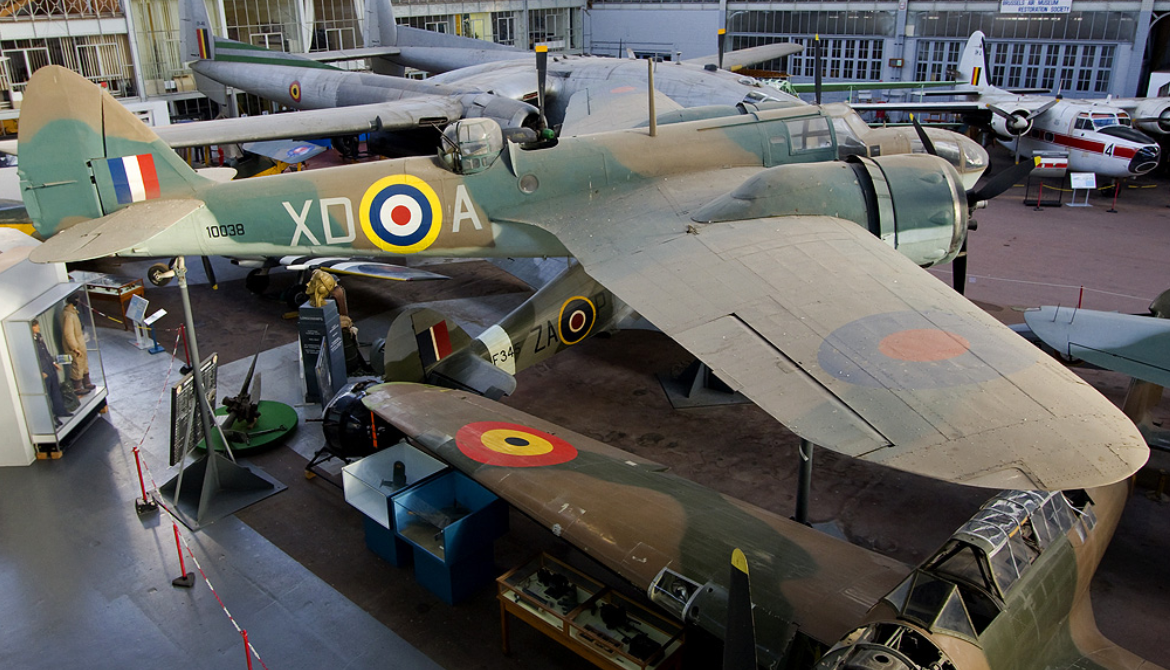
The Bristol Blenheim is a British light bomber designed and built by the Bristol Aeroplane Company, which was used extensively in the first two years of the Second World War, with examples still being used as trainers until the end of the war. Development began with the Type 142, a civil airliner, after a challenge from the newspaper proprietor Lord Rothermere to produce the fastest commercial aircraft in Europe. The Type 142 first flew in April 1935, and the Air Ministry, ordered a modified design as the Type 142M for the Royal Air Force (RAF) as a bomber.
Deliveries of the new Blenheim to RAF squadrons commenced on 10 March 1937. In service the Type 142M became the Blenheim Mk.I which would be developed into the long-nosed Type 149, the Blenheim Mk.IV, except in Canada where Fairchild Canada built the Type 149 under licence as the Bolingbroke. The Type 160 Bisley was also developed from the Blenheim but was already obsolete when it entered service..
Operational history
_K-SIM_02.jpg)
-
Rothermere became aware of Bristol's Type 135 proposal and on 3 March 1934, Barnwell issued him with a quote of the specification and performance statistics of the design, including an estimated top speed of 240 mph (390 km/h) at 6,500 ft (2,000 m). The Aquila engine had been shelved in favour of the supercharger-equipped, poppet-valve Bristol Mercury engine. Deeming it suitable for the challenge, the design of Type 135 was further adapted to produce the Type 142 to meet the requirements outlined by Rothermere. In late March 1934, Rothermere placed an order for a Type 142 aircraft, under which he paid for half of the estimated £18,500 cost up front and the remainder upon the aircraft's first flight in the following year.

The first production Type 142M with the military serial registration K7033, which served as the only prototype and made its first flight in June 1936.


Photo Gallery
Bristol Aeroplane Company
Bristol Blenheim type 142



Bristol Aeroplane Company
Bristol Blenheim type 142
General Info 1
-
-
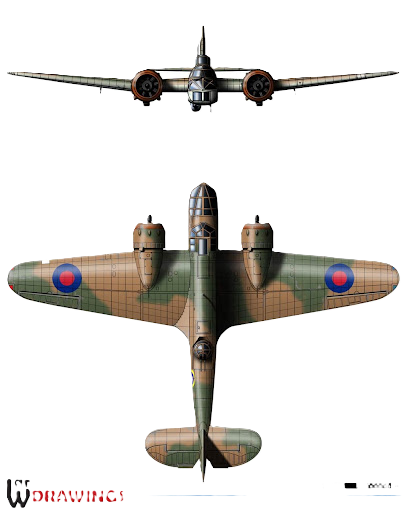
- Crew: 3
- Length: 42 ft 7 in (12.98 m)
- Wingspan: 56 ft 4 in (17.17 m)
- Height: 9 ft 10 in (3.00 m)
- Wing area: 469 sq ft (43.6 m2)
-
General Info 2
-
-
- Empty weight: 9,790 lb (4,441 kg)
- Gross weight: 14,400 lb (6,532 kg)
- Powerplant: 2 × Bristol Mercury XV 9-cylinder air-cooled radial piston engines, 920 hp (690 kW) each
- Propellers: 3-bladed Hamilton Standard variable-pitch propellers, built under a license agreement (1935) by de Havilland
-
General Info 3
- Maximum speed: 266 mph (428 km/h, 231 kn) at 11,800 ft (3,600 m)
- Cruise speed: 319 km/h,
- Range: 1,460 mi (2,350 km, 1,270 nmi)
- Service ceiling: 27,260 ft (8,310 m)
- Time to altitude: 6,500 ft (2,000 m) in 4 minutes 10 seconds
General Info 4
-
-
- Guns: ** 1 × .303 in (7.7 mm) Browning machine gun in port wing
- 1 or 2 × .303 in (7.7 mm) Browning guns rear-firing in under-nose blister or Nash & Thompson FN.54 turret
- 2 × .303 in (7.7 mm) Browning guns in dorsal turret
- Guns: ** 1 × .303 in (7.7 mm) Browning machine gun in port wing
-
.
Links to Youtube & Others
An airworthy Blenheim was rebuilt from a scrapped Bolingbroke over a 12-year period, only to crash at an airshow at Denham within a month of completion in 1987.

Bristol Company
Bristol Blenheim
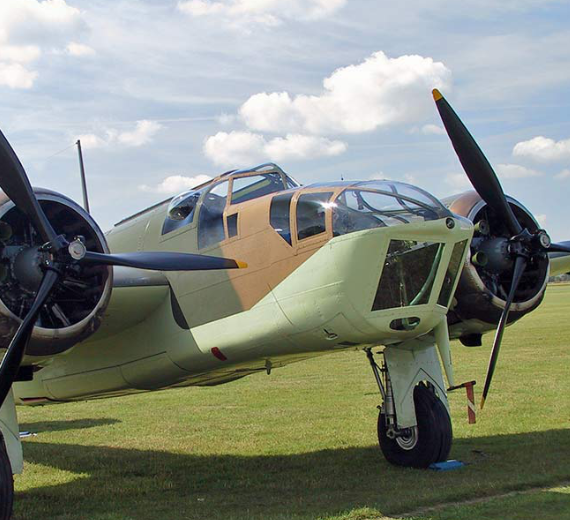
The Blenheim typically carried a crew of three – pilot, navigator/bombardier and wireless (radio) operator/air gunner.
Youtube Link
Armament comprised a single forward-firing .303 in (7.7 mm) Browning machine gun outboard of the port engine and a .303 in (7.7 mm) Lewis Gun in a semi-retracting Bristol Type B Mk I dorsal turret firing to the rear.
Read more in Bristol Aeroplane Company
Bristol Blenheim type 142
.